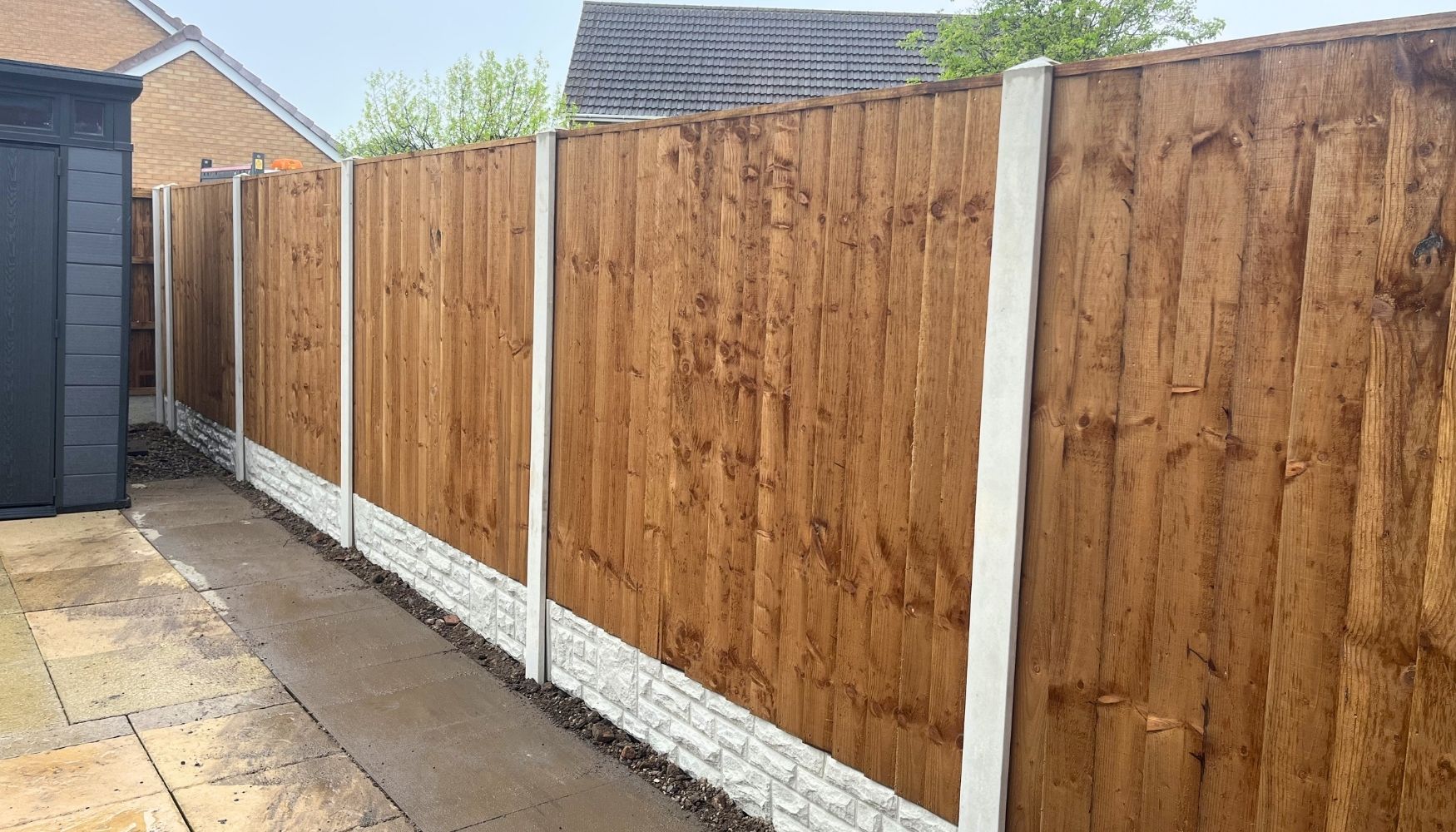
Fence panels in the UK are typically made to a standard width, which makes planning and installation more straightforward.
A standard fence panel is usually 6ft wide (approximately 1.83 metres). This applies across most common panel types and is the size used in the majority of residential fencing.
This guide explains how that standard width works in practice, how panel height fits into the picture, and when a custom size may be the better option.
Fence Panel Width in the UK
With a standard width of 6ft (approximately 1.83 metres) already established, most fencing systems are built around this measurement.
Fence posts are spaced to match the width of the panels, which allows each section to fit neatly into place without cutting or adjustment. This consistency helps keep installation straightforward and ensures the finished fence appears uniform across the full boundary.
The 6ft width is used across a wide range of panel types, including overlap, closeboard and decorative designs. Because of this, replacing a damaged panel or extending an existing fence is usually a simple process, as new panels are made to the same specification.
In practice, this standard sizing means most fencing projects can be planned using equal sections, with only minor adjustments needed for gates, corners or uneven ground.

Fence Panel Height Options
While fence panel width is usually fixed at 6ft, height varies depending on the level of privacy and structure required.
Common fence panel heights in the UK include:
- 3ft (0.9m) for low boundaries and front gardens
- 4ft (1.2m) for a more defined boundary without full enclosure
- 5ft (1.5m) for moderate privacy
- 6ft (1.8m) for full privacy in most gardens
- 6ft 6in (2m) as the typical upper limit for rear garden fencing without planning permission

Most domestic fencing uses panels between 5ft and 6ft, as they provide a practical balance between privacy and proportion.
Why 6ft Became the Standard Width
The 6ft width is not arbitrary. It works well for typical garden layouts and provides a stable span between posts without weakening the structure.
Using a consistent size also makes planning easier. Boundaries can be divided into equal sections, which reduces cutting on site and helps maintain a clean, uniform finish.
For installers and homeowners, it creates a predictable system that speeds up both quoting and installation.
Estimating How Many Panels You Need
Because panels are usually 6ft wide, calculating quantities is straightforward.
Measure the full length of your boundary and divide it by 6. The result gives an approximate panel count.
For example:
- 30ft boundary requires around 5 panels
- 60ft boundary requires around 10 panels
This method provides a starting point, but real projects often need adjustments. Gate openings, corners, and changes in ground level all affect the final layout.
For a more accurate estimate based on your exact measurements, use our fencing calculator to work out how much material you’ll need.
When Standard Panels Do Not Fit
Standard panels work well for straight, evenly measured boundaries. Problems tend to appear when the layout is less regular.
You may run into issues if:
- The boundary length does not divide evenly into 6ft sections
- The garden shape is irregular
- There are obstacles such as walls, sheds, or planting areas
- The ground slopes noticeably
In these situations, forcing standard panels into place can leave narrow gaps or uneven sections. This usually affects the overall appearance and can reduce stability.

When to Choose Made-to-Measure Panels
Custom panels solve the problems that standard sizes cannot. They allow each section of fencing to match the exact dimensions of your boundary.
This approach helps create:
- A consistent finish from end to end
- Clean alignment across uneven spaces
- A more secure and stable structure
Made-to-measure panels are often used on projects where appearance matters as much as function. They are also useful on sloped ground, where uniform heights can otherwise look uneven.
Choosing the Right Size for Your Garden
Selecting the right panel size is a practical decision as well as a visual one.
Height affects how private and enclosed a space feels. A 6ft fence will block most lines of sight, while a 3ft or 4ft fence keeps the space more open.
Width is less flexible, but it still matters in how the fence is laid out. A well-planned run using standard panels will look balanced. A poorly fitted run with gaps or cut-down sections will not.
It is also important to account for planning restrictions. Rear garden fences can normally reach 2 metres in height, while boundaries next to roads or pavements are subject to lower limits.

Need Help Choosing the Right Fence?
Ascot Fencing supplies a full range of standard fence panels along with made-to-measure options for more complex layouts.
Fencing products are available with nationwide delivery, making it easy to source the right panels regardless of where you are based. For local customers, installation is also available across Derbyshire, Nottinghamshire and Leicestershire, with work carried out by an experienced team.
If your boundary follows a straightforward line, standard 6ft panels are usually the right fit. Where the space is uneven or more complex, custom panels allow for a cleaner and more accurate finish.
Get in touch for practical advice or a free quote based on your space.